Introduction
Semiconductors are among the most important technologies in the modern world. They are the foundation of computers, smartphones, electric vehicles, medical equipment, communication networks, artificial intelligence systems, gaming devices, and countless electronic products.
From the processor inside a smartphone to the chips powering advanced AI data centers, semiconductors make modern digital technology possible.
A semiconductor is a material whose electrical conductivity can be controlled. This unique property allows engineers to build electronic components that can switch, amplify, process, store, and control electrical signals.
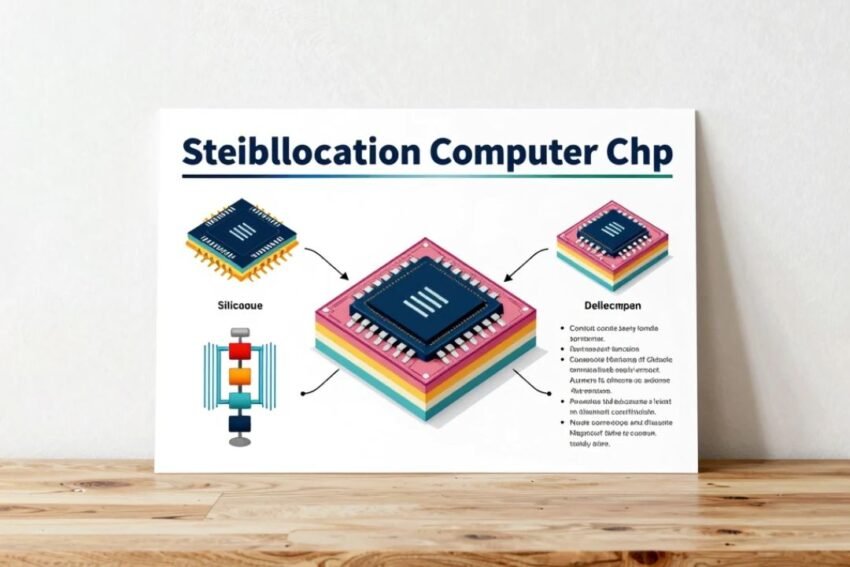
Modern computer chips, also known as integrated circuits or ICs, contain enormous numbers of electronic components packed into tiny areas. These chips allow devices to perform increasingly complex tasks while becoming smaller and more energy efficient.
Understanding how semiconductors work, the different types of chips, their applications, and future trends provides a useful foundation for understanding today’s technology industry.
What Is a Semiconductor?
A semiconductor is a material with electrical properties between those of a conductor and an insulator.
Conductors, such as copper, allow electrical current to flow easily. Insulators, such as certain plastics, strongly resist electrical current.
Semiconductors can be engineered so their electrical behavior can be controlled.
The most widely used semiconductor material is silicon.
Other semiconductor materials include:
- Gallium nitride
- Gallium arsenide
- Silicon carbide
- Indium phosphide
Different materials are useful for different applications.
How Do Semiconductors Work?
Semiconductor technology depends heavily on controlling the movement of electrical charge.
Engineers can modify semiconductor materials through a process called doping.
Doping introduces controlled impurities into a semiconductor to change its electrical properties.
This creates two important types of semiconductor material:
- N-type semiconductor
- P-type semiconductor
When these materials are combined, they can form structures used in electronic components such as diodes and transistors.
What Is a Transistor?
A transistor is one of the most important building blocks of modern electronics.
Transistors can act as switches or amplifiers.
In digital electronics, transistors can switch between different states, allowing computers to represent and process binary information.
Modern processors contain extremely large numbers of transistors.
By combining transistors into complex circuits, engineers can create CPUs, GPUs, memory chips, communication chips, and other advanced integrated circuits.
What Is a Computer Chip?
A computer chip is a small electronic circuit containing semiconductor components.
The term “chip” can refer to many types of integrated circuits.
Examples include:
- CPUs
- GPUs
- Memory chips
- Network processors
- Smartphone processors
- AI accelerators
- Microcontrollers
- Storage controllers
Each type of chip is designed for specific functions.
What Is an Integrated Circuit?
An integrated circuit, or IC, combines multiple electronic components onto a single semiconductor substrate.
Instead of building separate components and connecting them manually, manufacturers can place large numbers of transistors and other components onto one chip.
This provides several advantages:
- Smaller devices
- Higher performance
- Lower power consumption
- Greater reliability
- Lower cost at large production volumes
Integrated circuits are the foundation of modern electronic devices.
Types of Semiconductor Chips
The semiconductor industry produces many different types of chips.
Central Processing Units
A CPU is a general-purpose processor used to execute instructions.
CPUs are found in:
- Computers
- Servers
- Smartphones
- Embedded systems
- Industrial equipment
They are designed to handle a broad range of computational tasks.
Graphics Processing Units
A GPU is designed to perform many calculations in parallel.
GPUs are widely used for:
- Gaming
- Graphics rendering
- Artificial intelligence
- Machine learning
- Scientific computing
- Data processing
Their parallel-processing capabilities make them particularly useful for AI workloads.
Memory Chips
Memory semiconductors store information.
Major categories include:
- DRAM
- SRAM
- NAND flash
Memory chips are used in computers, smartphones, servers, storage devices, and other electronics.
Microcontrollers
A microcontroller combines processing, memory, and input/output functions into a compact chip.
Microcontrollers are common in:
- Cars
- Appliances
- Industrial systems
- Smart home devices
- Wearables
- Consumer electronics
AI Accelerators
AI accelerators are specialized processors designed to perform artificial intelligence workloads efficiently.
They can help accelerate:
- Neural network calculations
- Machine learning
- Generative AI
- Computer vision
- Data-center workloads
The growing demand for AI is driving significant interest in specialized semiconductor designs.
Semiconductor Manufacturing
Manufacturing advanced semiconductor chips is a highly complex process.
A simplified semiconductor manufacturing process includes several stages.
Wafer Production
Semiconductor materials are processed into thin circular wafers.
Photolithography
Manufacturers use advanced techniques to transfer extremely small circuit patterns onto the wafer.
Etching and Deposition
Material is selectively removed or added to build complex structures.
Doping
Controlled impurities are introduced to modify electrical properties.
Testing
Manufactured chips are tested to identify defects and verify performance.
Packaging
Individual chips are packaged so they can be connected to electronic systems.
The complete process requires sophisticated equipment, specialized materials, precision engineering, and extensive quality control.
Semiconductor Nodes
You may hear terms such as:
- 7nm
- 5nm
- 3nm
- 2nm
These labels are associated with semiconductor manufacturing generations and process technologies.
They should not be interpreted simply as one physical measurement describing every feature on a chip.
Advanced process technologies can help manufacturers improve transistor density, performance, power efficiency, or other characteristics, depending on the design.
Why Semiconductors Are Important
Semiconductors are essential because almost every modern digital system depends on electronic processing.
They power:
- Smartphones
- Computers
- Data centers
- Cars
- Medical devices
- Industrial equipment
- Satellites
- Communication systems
- Gaming consoles
- Smart home devices
Without semiconductor technology, modern digital infrastructure would not exist in its current form.
Semiconductors and Artificial Intelligence
The growth of artificial intelligence is creating strong demand for advanced semiconductor technology.
AI workloads require enormous amounts of computation.
Specialized AI chips can accelerate mathematical operations required by machine-learning models.
AI semiconductor technology includes:
- GPUs
- AI accelerators
- Neural processing units
- Specialized data-center processors
- Edge AI chips
Future AI systems are likely to require increasingly efficient processors capable of delivering more performance while controlling energy consumption.
Semiconductors and Smartphones
Modern smartphones depend on highly integrated semiconductor systems.
A smartphone processor may combine:
- CPU cores
- GPU cores
- AI processing
- Image processing
- Security features
- Connectivity functions
This integration allows smartphones to perform tasks that once required much larger computers.
Advanced semiconductor manufacturing has therefore played an important role in the evolution of mobile technology.
Semiconductors in Electric Vehicles
Electric vehicles rely heavily on semiconductor technology.
Chips are used for:
- Battery management
- Motor control
- Power conversion
- Driver assistance
- Infotainment
- Safety systems
- Charging systems
Power semiconductors are particularly important for efficiently controlling electrical energy.
Materials such as silicon carbide and gallium nitride are attracting interest for certain power-electronics applications because of their electrical characteristics.
Semiconductors and 5G
5G communication networks require sophisticated semiconductor technology.
Chips are used in:
- Smartphones
- Base stations
- Network equipment
- RF systems
- Signal processing
Advanced communication chips help devices transmit and process large amounts of data efficiently.
Future communication technologies will continue to increase demand for advanced semiconductor components.
Semiconductor Industry Challenges
The semiconductor industry faces several challenges.
Manufacturing Complexity
Advanced chip production requires extremely sophisticated facilities and equipment.
High Development Costs
Designing and manufacturing leading-edge chips can require significant investment.
Supply Chain Risks
Semiconductor production depends on a global network of manufacturers, suppliers, materials, equipment providers, and logistics systems.
Energy Consumption
Modern semiconductor manufacturing facilities can require substantial amounts of energy and resources.
Geopolitical Risks
Because semiconductors are strategically important, international trade and technology policies can influence supply chains and manufacturing.
Future Semiconductor Trends
Several major trends are likely to shape the future of semiconductor technology.
Advanced Process Technologies
Manufacturers continue to develop smaller and more advanced process technologies.
Chiplets
Chiplet technology allows complex processors to be constructed from multiple smaller chip components.
This approach can provide greater flexibility in chip design.
Advanced Packaging
New packaging technologies can improve communication between different components and increase system performance.
AI Chips
Demand for specialized AI processors is expected to remain an important driver of semiconductor innovation.
Edge Computing
More AI and data processing is moving closer to users and devices.
This creates demand for efficient processors designed for edge environments.
Energy-Efficient Chips
As computing workloads increase, power efficiency is becoming increasingly important.
Future chips will need to deliver higher performance while managing energy consumption.
Semiconductors and the Future of Computing
The future of computing depends heavily on semiconductor innovation.
Emerging technologies such as:
- Artificial intelligence
- Quantum computing
- 5G and future networks
- Autonomous vehicles
- Robotics
- Edge computing
- Advanced data centers
all depend on semiconductor technology in different ways.
Even quantum computing systems require sophisticated electronics and semiconductor-based control infrastructure.
How to Learn About Semiconductors
Beginners interested in semiconductor technology can start with basic electronics.
A useful learning path includes:
- Learn basic electricity and electronics.
- Understand conductors and insulators.
- Study semiconductor materials.
- Learn about diodes.
- Understand transistors.
- Study integrated circuits.
- Explore CPU and GPU architecture.
- Learn how chips are manufactured.
- Explore AI and specialized processors.
- Follow semiconductor industry developments.
Understanding these fundamentals can provide a strong foundation for careers in electronics, computer engineering, chip design, and technology.
Conclusion
Semiconductors are the foundation of modern electronics and computing. From smartphones and computers to electric vehicles, AI data centers, communication networks, and medical devices, semiconductor chips are responsible for many of the technologies people rely on every day.
Silicon remains a fundamental semiconductor material, while technologies such as silicon carbide, gallium nitride, advanced packaging, chiplets, and specialized AI processors are expanding the capabilities of modern electronics.
The semiconductor industry faces challenges involving manufacturing complexity, supply chains, energy consumption, costs, and geopolitical uncertainty. At the same time, demand for advanced chips continues to grow as AI, connected devices, electric vehicles, and high-performance computing develop.
The future of semiconductors and chips will likely focus on higher performance, greater efficiency, advanced packaging, specialized processors, and new manufacturing technologies.