Introduction
Software and Software as a Service (SaaS) have become essential parts of modern digital life. From business management platforms and communication tools to accounting software, customer relationship management systems, artificial intelligence tools, and productivity applications, software powers almost every part of the digital economy.
Traditional software was often installed directly on computers or servers. Users typically purchased a license, downloaded the program, and managed updates themselves. SaaS introduced a different approach by allowing users to access software through the internet, usually through a subscription.
Today, businesses of all sizes use SaaS platforms to reduce infrastructure costs, improve collaboration, automate tasks, and access powerful digital tools without maintaining complex systems themselves.
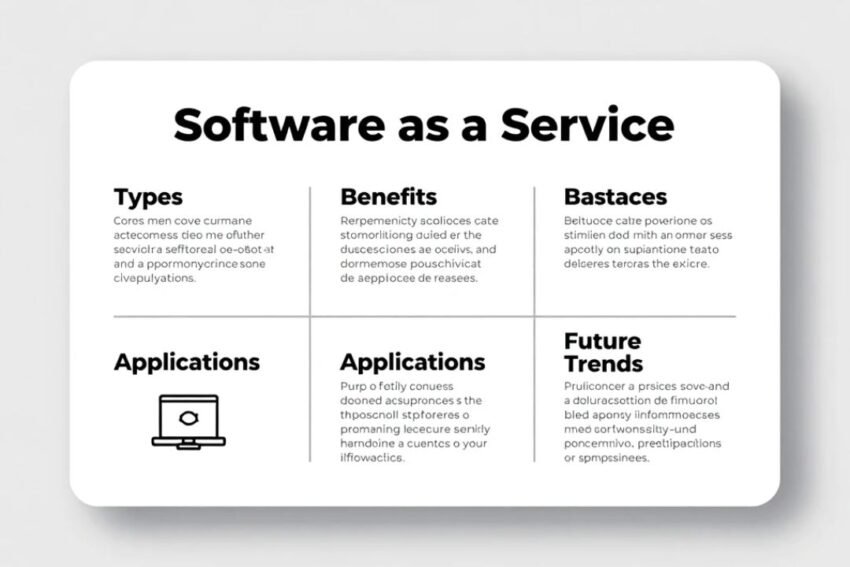
This Software & SaaS explained guide explores what software and SaaS are, their major types, benefits, applications, challenges, and future trends.
What Is Software?
Software is a collection of programs, instructions, and data that tells a computer or digital device how to perform specific tasks.
Unlike hardware, which refers to physical components such as processors, memory, keyboards, and storage devices, software is digital.
Software can perform countless functions, including:
- Processing information
- Managing files
- Running applications
- Communicating over networks
- Managing businesses
- Editing images and videos
- Playing games
- Automating tasks
- Analyzing data
Modern smartphones, computers, vehicles, smart appliances, and industrial systems all depend on software.
What Is SaaS?
Software as a Service (SaaS) is a software delivery model in which applications are hosted by a service provider and accessed through the internet.
Instead of installing and maintaining software locally, users can generally access SaaS applications through a web browser or dedicated application.
Common SaaS characteristics include:
- Cloud-based infrastructure
- Subscription pricing
- Automatic updates
- Remote accessibility
- Centralized maintenance
- Scalable user management
Examples of SaaS categories include project management, accounting, CRM, communication, marketing, cybersecurity, and collaboration platforms.
Software vs SaaS
Software and SaaS are related but not identical concepts.
Software is the broader term for computer programs and applications.
SaaS is a specific method of delivering software to users.
For example, a company may develop accounting software that customers install on their computers. Alternatively, the same type of accounting application could be delivered as SaaS through the cloud.
In simple terms:
Software = the application or program
SaaS = a cloud-based way of delivering software
Major Types of Software
Software can be divided into several broad categories.
System Software
System software manages computer hardware and provides a foundation for other applications.
Examples include:
- Operating systems
- Device drivers
- System utilities
- Firmware
Windows, macOS, Linux, Android, and other operating systems are examples of system software.
Application Software
Application software is designed to help users perform specific tasks.
Examples include:
- Word processors
- Web browsers
- Video editors
- Accounting programs
- Design applications
- Communication tools
Development Software
Development software helps programmers build and maintain applications.
Examples include:
- Code editors
- Integrated development environments
- Compilers
- Debugging tools
- Version-control systems
Security Software
Security software helps protect systems, networks, and data.
Examples include:
- Antivirus applications
- Endpoint security
- Firewalls
- Password managers
- Identity management tools
Common SaaS Categories
The SaaS industry covers a wide range of applications.
Customer Relationship Management
CRM platforms help businesses manage customer information, sales pipelines, communication, and marketing activities.
Businesses can use CRM software to organize customer interactions and improve sales processes.
Project Management
Project management SaaS platforms help teams manage:
- Tasks
- Deadlines
- Workflows
- Team responsibilities
- Project progress
These tools are especially useful for remote and distributed teams.
Accounting and Finance
Cloud accounting software allows businesses to manage:
- Invoices
- Expenses
- Payments
- Financial reports
- Payroll
- Tax-related records
Communication and Collaboration
Communication platforms allow teams to communicate and collaborate from different locations.
Common capabilities include:
- Messaging
- Video meetings
- File sharing
- Team channels
- Document collaboration
Marketing Software
Marketing SaaS platforms can support:
- Email marketing
- Search engine optimization
- Social media management
- Customer analytics
- Advertising
- Marketing automation
Human Resources
HR SaaS platforms can help businesses manage:
- Employee information
- Recruitment
- Payroll
- Benefits
- Attendance
- Performance management
Benefits of SaaS
SaaS has become popular because it offers several advantages.
Lower Upfront Costs
Traditional software can require large upfront licensing and infrastructure expenses.
SaaS typically uses subscription-based pricing, which can make software easier to access for businesses with limited budgets.
Easy Accessibility
Users can access many SaaS applications from different devices and locations as long as they have the required internet connection and permissions.
This supports remote and hybrid work.
Automatic Updates
SaaS providers generally manage software updates and infrastructure maintenance.
Users do not always need to manually install major updates.
Scalability
Businesses can often add or remove users and adjust plans as their needs change.
This makes SaaS attractive to growing organizations.
Collaboration
Cloud-based software allows multiple users to work with shared information and workflows.
This can improve collaboration between teams.
SaaS for Small Businesses
Small businesses can benefit significantly from SaaS because they may not have large IT departments.
Instead of building and maintaining expensive infrastructure, a small business can use cloud-based tools for:
- Accounting
- Customer management
- Marketing
- Communication
- File storage
- Project management
- Cybersecurity
This allows smaller organizations to access technologies that previously required significant technical investment.
SaaS for Large Enterprises
Large organizations also rely heavily on SaaS.
Enterprise SaaS platforms can support thousands of employees and complex workflows.
Businesses may use SaaS for:
- Enterprise resource planning
- Customer relationship management
- Human resources
- Data analytics
- Security
- Collaboration
- Business intelligence
Enterprise SaaS platforms often provide advanced administration, integration, security, and compliance features.
SaaS and Artificial Intelligence
Artificial intelligence is becoming increasingly important in SaaS applications.
AI can help SaaS platforms automate tasks and provide intelligent features.
Potential applications include:
- AI-powered customer support
- Automated data analysis
- Content generation
- Predictive analytics
- Workflow automation
- Personalized recommendations
- Intelligent search
- Meeting summaries
AI-powered SaaS can reduce repetitive work and help users make faster decisions.
SaaS and Cloud Computing
SaaS is closely connected to cloud computing.
Cloud infrastructure provides the computing resources required to host and deliver many SaaS applications.
Cloud platforms can provide:
- Computing power
- Storage
- Networking
- Databases
- Security infrastructure
- Backup systems
This allows SaaS companies to scale their services as customer demand changes.
SaaS Security
Security is one of the most important considerations when using SaaS applications.
Businesses may store sensitive information in cloud platforms, including customer data, financial information, and business documents.
Important SaaS security practices include:
- Strong authentication
- Multi-factor authentication
- Access controls
- Encryption
- Regular security updates
- Employee security training
- Data backups
- Monitoring and auditing
Businesses should carefully evaluate the security practices of SaaS providers before storing sensitive information.
Challenges of SaaS
Despite its benefits, SaaS also has potential disadvantages.
Internet Dependence
Many SaaS applications require reliable internet connectivity.
Poor connectivity can affect access and productivity.
Subscription Costs
Although SaaS can reduce upfront expenses, recurring subscription fees can become significant over time.
Data Privacy
Organizations must understand how providers collect, store, process, and protect customer information.
Vendor Lock-In
Moving data and workflows from one SaaS platform to another can sometimes be difficult.
Service Availability
Businesses may depend on the provider’s infrastructure and uptime.
For critical operations, organizations should evaluate reliability and backup options.
The Future of Software & SaaS
The software industry is evolving rapidly.
Several trends are expected to shape the future of SaaS and software development.
AI-Native SaaS
Future SaaS applications are likely to integrate AI directly into their core functionality rather than treating AI as an optional feature.
AI agents could eventually perform multi-step tasks across different business systems.
No-Code and Low-Code Platforms
No-code and low-code tools allow users to create applications and automate workflows with limited traditional programming.
These platforms can help businesses develop solutions more quickly.
Vertical SaaS
Vertical SaaS focuses on specific industries rather than general business needs.
Examples may include software designed specifically for:
- Healthcare
- Education
- Real estate
- Construction
- Legal services
- Manufacturing
SaaS Automation
Automation will continue to reduce repetitive manual work.
Businesses may use automated workflows to connect applications, update databases, generate reports, and manage customer interactions.
Better Cybersecurity
As SaaS adoption increases, security will become even more important.
Providers will continue developing stronger identity management, encryption, threat detection, and access-control technologies.
Software and SaaS for Remote Work
Remote work has increased the importance of cloud-based software.
Distributed teams can use SaaS tools to communicate, manage projects, share files, organize meetings, and track workflows.
A modern remote-work technology stack may include:
- Communication software
- Project management
- Cloud storage
- Video conferencing
- Document collaboration
- CRM systems
- Security tools
These technologies allow employees to work together even when they are located in different cities or countries.
How to Choose the Right SaaS Software
Businesses should consider several factors before selecting a SaaS platform.
1. Identify Your Needs
Determine which business problem the software should solve.
2. Compare Features
Review the features and limitations of different platforms.
3. Evaluate Pricing
Consider both monthly and long-term subscription costs.
4. Check Security
Review authentication, encryption, privacy, and compliance features.
5. Consider Integration
Make sure the SaaS platform can connect with existing business systems.
6. Evaluate Scalability
Choose a solution that can grow with your organization.
7. Test the User Experience
A powerful platform is less useful if employees find it difficult to use.
Why Software & SaaS Matter
Software and SaaS have changed how individuals and businesses access technology.
Instead of requiring expensive infrastructure and complicated installations, organizations can often access advanced tools through cloud-based subscriptions.
This has lowered barriers to technology adoption and helped businesses automate operations, collaborate remotely, analyze data, and serve customers more efficiently.
SaaS has also created opportunities for software companies to deliver continuous improvements through frequent updates and cloud-based services.
Conclusion
Software and SaaS are fundamental technologies powering the modern digital economy. Software provides the applications and programs used by computers and digital devices, while SaaS offers a cloud-based method for delivering many of those applications through the internet.
From CRM and accounting to project management, cybersecurity, marketing, artificial intelligence, and collaboration, SaaS applications are helping organizations operate more efficiently.
The benefits of SaaS include easier accessibility, scalability, automatic updates, collaboration, and potentially lower upfront costs. However, businesses must also consider security, privacy, subscription expenses, internet dependence, vendor lock-in, and service reliability.
Looking ahead, AI-powered SaaS, automation, vertical software, low-code development, intelligent agents, and stronger cybersecurity are likely to reshape the software industry.